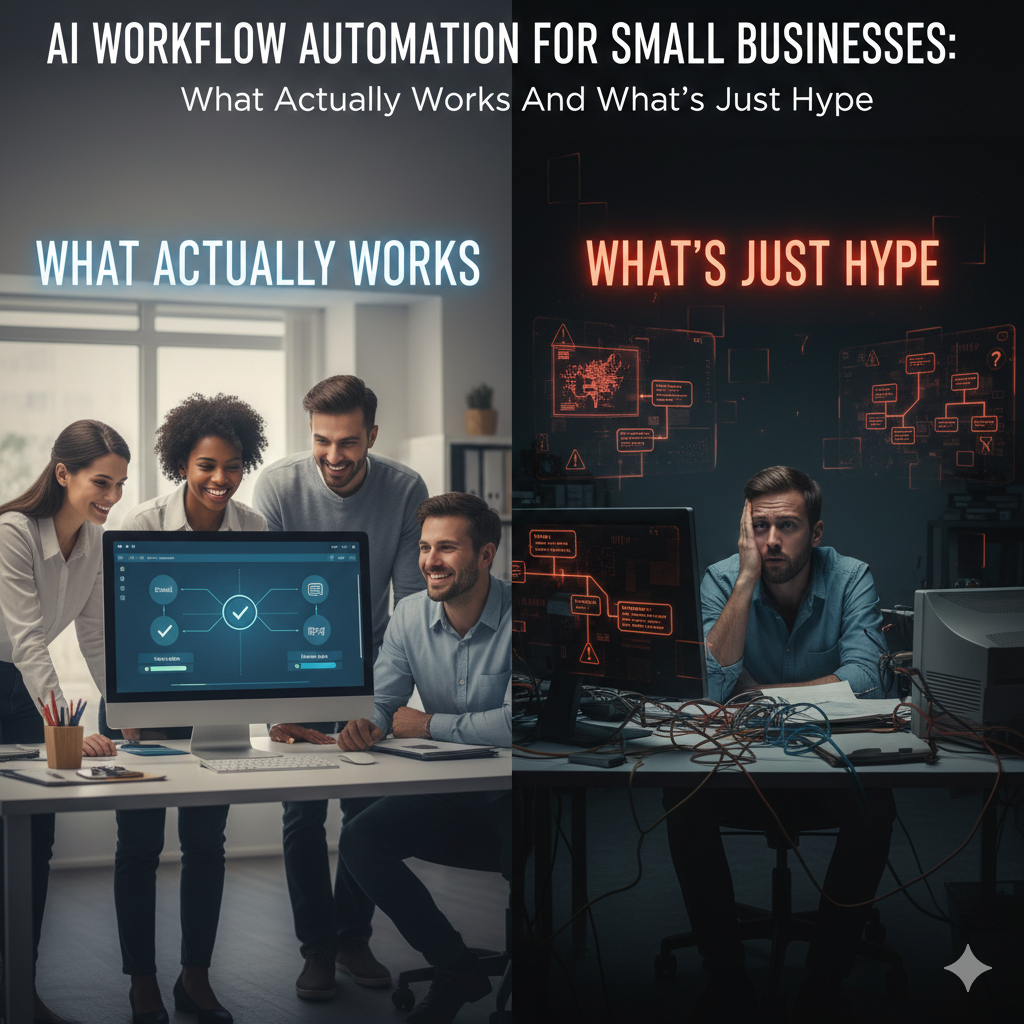
The difference between this and regular AI Workflow Automation for Small Businesses? Regular automation is basically if this happens, then do that. It’s rigid. It breaks when something unexpected happens.
For a small business, this means you can automate sophisticated stuff that used to require hiring another person. Or stuff that was eating up all your existing team’s time.
Why You Should Care About This Now
The numbers on this are pretty crazy. Small business owners say they’re spending 68% of their time on administrative garbage instead of actually growing their business. Sales teams waste 64% of their time on stuff that isn’t selling – data entry, research, coordinating follow-ups, all that.
And get this – 40% of small businesses say lack of time is their biggest barrier to growth. Not money. Not competition. Time.
AI workflow automation for small businesses hits all of these problems head-on. It can cut your operational costs by 30-50% by taking over tasks. It frees up your team to focus on work that actually matters. It eliminates the human errors that happen when people are doing repetitive stuff all day. It lets you scale without having to hire proportionally more people. And it means you can respond to customers 24/7 without paying someone to work nights.
The ROI usually shows up in weeks, not months. Which makes this one of the most practical growth strategies for businesses that don’t have unlimited resources.
Use Case 1: Automating Lead Generation and Qualification
What AI Can Actually Do About It
AI lead generation automation has transformed how small businesses find and qualify prospects. Understanding how to automate lead generation with AI starts with knowing what signals matter. They look at stuff like what industry they’re in, how big the company is, what technology they use, whether they just got funding, and if they’re hiring like crazy – all these signals that tell you if they match your ideal customer profile.
Next comes outreach, but here’s where it gets interesting – it’s not sending generic templates. The AI writes messages that reference specific details about each prospect’s situation. It sounds personal because it is personal, just generated at scale.
Then it orchestrates everything across email, LinkedIn, phone calls, whatever channels make sense. Creates cohesive campaigns that reinforce your message without annoying people with too much contact.
And finally, it qualifies leads by analyzing tons of behavioral and firmographic signals to figure out who’s actually ready to buy.
What This Looks Like in Real Life
I worked with a B2B software company that had three people on its sales team. Before AI Workflow Automation for Small Businesses, those three were spending 15-20 hours every week just on prospecting activities.
Their average deal size even went up 30% because the targeting was so much better. Within six months, revenue grew 180%.
Platforms like RainmakerOS lead generation combine prospect intelligence, personalized outreach generation, and automated follow-up sequences. RainmakerOS.ai and similar tools with Revenue Sage methodologies tend to deliver the best results.
Use Case 2: Email Management That Doesn’t Make You Want to Cry
The AI Solution
AI can handle several pieces of the email puzzle.
It automatically categorizes incoming emails – customer inquiry, sales lead, support request, internal stuff, whatever. It scores them for priority based on who sent it, how urgent the content is, potential deal size, and how you’ve interacted with them before.
Real Numbers from Real Companies
A consulting firm with five consultants implemented this for email management. They cut email processing time by 60% – from 2.5 hours down to 1 hour per day per person. Response time to clients improved from 4 hours to 30 minutes on average.
They stopped missing follow-ups entirely. Zero forgotten client requests. That translated to a 25% increase in billable hours because they got all that time back. And client satisfaction scores went up from the faster, more consistent responses.
Use Case 3: CRM That Actually Stays Updated
How AI Fixes This
AI can basically eliminate manual CRM data entry.
It monitors emails, calendar entries, and phone logs to automatically log customer interactions. When reps forward emails or attach meeting notes, AI extracts the key information – next steps, who the decision-makers are, budget info, timing – and populates the right CRM fields automatically.
It identifies and merges duplicate contacts or accounts so your data stays clean. It automatically adds additional information to records by pulling from LinkedIn, company websites, news databases, wherever it can find relevant data. And as reps create new records, it suggests likely values for various fields based on patterns and available information.
The Impact This Has
I saw a B2B sales team with seven reps that was constantly struggling with incomplete CRM data. After implementing this through RainmakerOS.ai, data entry time dropped by 90% – from 45 minutes to 5 minutes per day per rep.
CRM data completeness went from 40% to 95%. Forecasting accuracy improved dramatically because they finally had visibility into opportunities. That’s 6 hours per week per rep that got redirected to actually selling. And better pipeline visibility meant managers could coach more effectively and allocate resources better.
For any small business with a sales team, this automation pays for itself immediately just from time savings. Finding the best AI automation for sales teams means prioritizing tools that handle CRM updates automatically. The improved data quality is a bonus.
Use Case 4: Social Media Without the Time Sink
What This Means in Practice
A retail business with limited marketing resources implemented this. Their social media presence went from 2-3 posts a week to daily engagement across four platforms. Audience growth tripled from 5% to 15% per quarter. Leads from social media increased 250%.
Time spent on social media management dropped 70%. And brand awareness and sentiment both improved measurably.
Use Case 5: Scheduling Meetings Without the Email Tennis
The Problem
The back-and-forth of scheduling meetings wastes an embarrassing amount of time. The average professional spends 2-3 hours every week just coordinating calendars. For small business owners and sales teams, that’s time you could spend serving customers or closing deals.
Real Results
A consulting firm where partners were spending 4+ hours a week on scheduling implemented this. Scheduling time was reduced to essentially zero. Meeting volume increased 25% because the friction of coordinating disappeared.
Client satisfaction improved from eliminating scheduling frustrations. And those partners redirected 4 hours weekly to billable work.
Questions People Always Ask Me
Is this affordable for small businesses?
Yeah. Modern AI platforms have pricing designed specifically for smaller companies, typically $500-$3,000 a month. When you actually calculate what you’re spending on employee time doing manual tasks, it pays for itself within weeks. RainmakerOS.ai has scalable plans that grow with you.
How long does implementation take?
Most small businesses can get their first automation running in 1-2 weeks. Simple stuff like email management or scheduling can go live in days.
Can small businesses without technical teams use this?
Absolutely.
Getting Started Without Overthinking It
The small businesses that are going to thrive in the next decade are the ones that embrace this stuff strategically. AI revenue automation services are no longer optional for competitive businesses. Not to replace their team – to amplify what their team can accomplish by eliminating tedious work.
This isn’t some future concept anymore. It’s not a luxury for big enterprises. It’s accessible, affordable, and delivers measurable results across industries through platforms like RainmakerOS.
The opportunity is here now. The question is whether you’re going to take advantage of it while it’s still giving you a competitive edge, or wait until everyone else is already doing it and it’s just table stakes.